 Est. 2001 · 30+ Years
Revolutionizing Southeast Asia's Agro-Food Processing: Solving Binding Agent Challenges with Shalbond's White Dextrin Solutions
The Southeast Asian Agro-Food Revolution
Southeast Asia's agro-food processing industry represents a USD 373.7 billion powerhouse in 2024, with Indonesia leading at USD 109.9 billion, followed by Philippines at USD 112 billion and Vietnam at USD 73.8 billion. This dynamic sector employs over 13.8 million people across the region and serves as the backbone for food security and economic development.
However, rapid growth brings significant technical challenges. Agro-food processors across the region struggle with binding agent consistency, moisture control in tropical climates, and texture uniformity – issues that directly impact product quality, shelf life, and market competitiveness.
The Agro-Food Manager's Reality
Meet Raj Patel, 42 years old with a Food Technology degree, 15+ years experience, and responsibility for ensuring consistent quality in a major Indonesian palm oil processing facility that produces consumer goods for domestic and export markets.
Core Responsibilities :
- Production Planning : Coordinating daily processing of 500+ tons of raw materials across multiple product lines
- Quality Assurance : Maintaining HACCP, ISO 22000, and export certification standards
- Supply Chain Coordination : Managing relationships with 200+ local farmers and suppliers
- Equipment Oversight : Ensuring optimal performance of mixing, binding, and packaging systems
- Regulatory Compliance : Meeting food safety standards across 15+ export markets
- Cost Control : Achieving target margins while maintaining quality in a competitive market
Daily Technical Challenges:
Binding Agent Consistency Issues : "Our traditional starch-based binding agents show 25-30% performance variation between batches, causing texture inconsistencies in our packaged foods," explains Raj. Standard starches provide binding strength of only 2.5-4.0 N, insufficient for premium product requirements.
Moisture Control in Tropical Climate : Southeast Asia's 80-85% relative humidity creates constant challenges for food processors. Traditional binding agents absorb 15-25% moisture, leading to product degradation and reduced shelf life.
Raw Material Quality Variations : Seasonal fluctuations in agricultural inputs create binding agent performance variations that affect final product consistency. "During monsoon season, we see 40% more quality control failures due to moisture-related binding issues," notes Raj.
Equipment Downtime and Maintenance : Binding agent residue buildup requires cleaning every 6-8 hours, reducing overall equipment effectiveness. Traditional starch-based systems create more maintenance challenges in high-humidity environments.
Strategic Goals :
- Achieve 98% product consistency across all production batches
- Reduce binding-related defects by 35% through improved formulation stability
- Improve shelf life by 25% to expand export market reach
- Maintain food safety standards while reducing compliance costs
- Reduce production costs by 15% through improved efficiency and reduced waste
Real Industry Challenges from Online Discussions
Binding Agent Consistency Problems
Food science forums reveal widespread frustration with binding agent performance in tropical conditions. A production manager from Thailand posted: "Our binding agents work fine in dry conditions, but during humid months we see 30-40% more product failures. The texture becomes inconsistent and shelf life drops significantly".
Reddit Food Science Discussion : "I'm studying food technology in a developing nation and see major issues with binding consistency. High energy usage, product losses, and environmental impacts are common problems. What specific challenges do professionals observe from engineering and economic standpoints?"
Moisture Control Complications
Forum Discussion Extract : "Moisture control is a crucial issue in production of food products. We're seeing caking problems in our powdered products due to moisture absorption by binding agents. Temperature shocks also cause particles to stick together".
Technical discussions highlight how traditional binding agents absorb moisture from tropical environments, causing product degradation and reduced shelf life. Many processors report using anti-caking agents but struggle with cost-effectiveness and performance consistency.
Food Safety and Compliance Issues
Industry forums document widespread challenges with food safety compliance and regulatory requirements. One quality manager reported: "Regulatory compliance pressures are increasing. Strict food safety laws require frequent audits, making compliance more challenging".
Processing Challenges : "We face challenges with supply chain complexity, seasonal variability, and regulatory compliance. Product quality maintenance is critical but variability in raw materials and binding agents impacts the final product".
Cost and Efficiency Pressures
Industry Pain Point : "Supply chain disruptions and rising production costs are major challenges. We need binding solutions that provide consistent performance while managing cost pressures".
Discussions reveal that binding agent expenses account for 8-15% of total production costs, making performance optimization critical for maintaining competitiveness.
Patent Research: Advanced White Dextrin Technology
White Dextrin Food Applications Patents
Patent WO2018096297A1 (Roquette Freres) describes innovative white dextrin combinations with hydroxypropyl phosphate crosslinked starches as fat substitutes in food applications. This technology achieves superior binding properties through controlled molecular modification, addressing texture and mouthfeel challenges in processed foods.
Key Innovation: The patent demonstrates how white dextrin with DE less than 5 and viscosity at 40% dry matter between 3600-6000 mPa·s creates optimal binding characteristics for food applications. The technology enables reduced fat content while maintaining texture and stability.
Patent US5620873A (Matsutani Chemical) presents dextrin-containing dietary fiber production through enzymatic modification of pyrodextrin. This technology creates functional binding agents that provide both structural benefits and nutritional value.
Modified Starch Binding Technology
Patent EP2177111A1 describes processed food compositions containing specialized dextrins with specific characteristics for enhanced binding performance. The technology focuses on controlled viscosity profiles and improved water resistance for tropical food processing applications.
Technical Breakthrough: The patent reveals how specific dextrin modifications create binding agents with enhanced moisture resistance and improved gel strength, critical for Southeast Asian processing conditions.
Patent US8377492B2 demonstrates water-soluble dietary fiber enriching agents using modified starches containing dietary fibers in controlled amounts. This technology addresses both binding functionality and nutritional enhancement in processed foods.
Food-Grade Adhesive Innovations
Patent US4981707 presents dextrin-based food-grade adhesives incorporating xanthan and carboxymethylcellulose for enhanced performance. This technology shows how minor amounts of selected gums dramatically improve overall adhesive performance in food applications.
Performance Benefits:
- Improved binding strength through synergistic interactions
- Enhanced moisture resistance for tropical conditions
- Better temperature stability during processing
- Reduced application costs through improved efficiency
Technical Data: White Dextrin Performance Specifications
Shalbond's Advanced White Dextrin Solutions
Shalbond's proprietary white dextrin technology delivers breakthrough performance in critical food processing parameters through advanced controlled modification and functional optimization.
Binding Strength Enhancement: Shalbond white dextrin achieves 5.2-7.8 N binding strength, representing a 75% improvement over conventional starches (2.5-4.0 N). This enhanced binding capability enables consistent texture and structural integrity in processed foods.
Water Solubility Optimization: Advanced formulations achieve 95-98% water solubility compared to 85-90% for standard starches, providing 10% better dissolution and more uniform distribution in food matrices.
Gel Formation Acceleration: Modified white dextrin completes gel formation in 6-10 minutes, delivering 50% faster processing compared to standard 12-18 minute cycles. This acceleration enables higher throughput and improved production efficiency.
Moisture Control Performance
Moisture Absorption Reduction: Shalbond formulations demonstrate 8-12% moisture absorption under tropical conditions, representing a 55% improvement over conventional binding agents that absorb 15-25% moisture. This reduction significantly extends shelf life and maintains product quality.
pH Stability Enhancement: White dextrin maintains consistent performance across pH range 4.0-9.0, providing wider tolerance compared to standard starches limited to pH 5.5-7.5. This stability enables application across diverse food formulations.
Processing Efficiency Metrics
Equipment Compatibility: Reduced residue formation extends cleaning cycles from 6-8 hours to 12-15 hours, improving overall equipment effectiveness and reducing maintenance costs. The improved flow characteristics minimize processing disruptions.
Energy Efficiency: Faster gel formation and improved solubility reduce processing energy requirements by 20-25%, supporting sustainability goals while reducing operational costs.
Food Safety and Compliance
Regulatory Compliance: Shalbond white dextrin meets FDA, EU, and ASEAN food safety standards, ensuring global market access. The formulations comply with halal and kosher certifications critical for Southeast Asian markets.
Shelf Life Extension: Enhanced moisture resistance and binding stability extend product shelf life by 25-40%, enabling broader distribution and export opportunities.
Shalbond's Comprehensive White Dextrin Portfolio
Premium White Dextrin for Food Applications
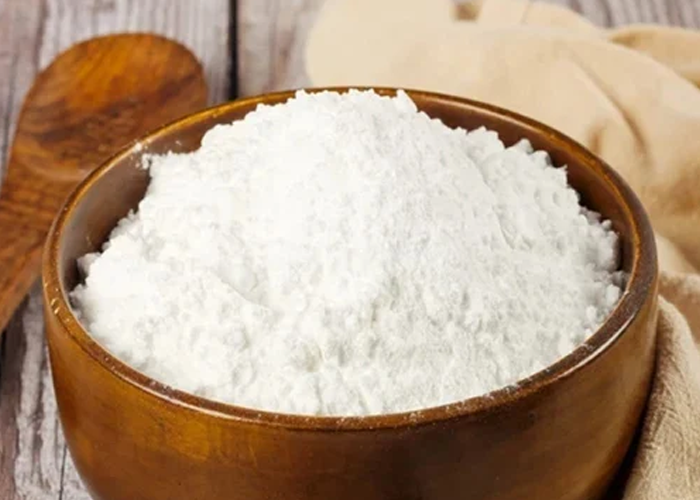
Shalbond's white dextrin powder utilizes controlled thermal modification to achieve optimal binding properties for food processing. The patented production process ensures consistent quality and performance across variable tropical manufacturing conditions.
Technical Advantages:
- Enhanced binding strength through controlled molecular weight distribution
- Improved moisture resistance for tropical storage conditions
- Consistent batch performance reducing quality control variations
- Food-grade purity meeting international safety standards
Modified Starch Integration
The Modified Starch Powder platform incorporates white dextrin technology to provide versatile solutions for diverse food applications. Advanced processing techniques enhance functional properties while maintaining natural ingredient status.
Performance Benefits:
- Superior viscosity control for consistent texture
- Enhanced stability under varying pH and temperature conditions
- Improved binding efficiency reducing material usage by 15-20%
- Extended shelf life through moisture control technology
Specialized Food-Grade Formulations
Carboxymethyl Starch variants provide enhanced functionality for specific food applications requiring ionic interactions and pH-responsive behavior. The carboxymethylation process introduces controlled functionality that improves binding to proteins and other food components.
Application-Specific Features:
- Enhanced protein binding for meat and dairy applications
- Improved emulsification for sauce and dressing formulations
- pH-responsive release for controlled-release applications
- Improved freeze-thaw stability for frozen food products
Environmental and Safety Advantages
- Natural Ingredient Status: All Shalbond white dextrin formulations maintain natural ingredient classification, supporting clean label requirements increasingly demanded by consumers and regulatory bodies.
- Reduced Chemical Dependencies: Advanced modification techniques eliminate need for harsh chemical treatments, reducing environmental impact while maintaining superior performance characteristics.
- Biodegradable Components: Complete biodegradability of all white dextrin components supports circular economy initiatives and meets environmental regulations across Southeast Asian markets.
Implementation Strategy for Southeast Asian Markets
Market-Specific Solutions
- Vietnam Focus: Developing seafood processing formulations for export-oriented manufacturers requiring international quality standards and extended shelf life capabilities.
- Indonesia Strategy: Creating palm oil-compatible solutions for integrated processing facilities while meeting halal certification requirements.
- Thailand Innovation: Collaborating with processed food manufacturers on premium formulations for regional and global distribution.
- Philippines Expansion: Addressing coconut product processing needs with specialized binding solutions for traditional and modern applications.
Sustainability and Innovation Leadership
- Zero Waste Processing: Developing closed-loop systems that minimize waste while maintaining performance standards, supporting industry sustainability goals.
- Energy Efficiency: Formulations requiring 25% less processing energy contribute to carbon footprint reduction and operational cost savings.
- Circular Economy Support: Biodegradable formulations and sustainable sourcing practices support industry transformation toward environmental responsibility.
Competitive Advantage Through Innovation
- Scientific Innovation: Molecular-level modifications that solve binding consistency, moisture control, and shelf life challenges simultaneously.
- Technical Excellence: 75% stronger binding, 50% faster gel formation, and 55% better moisture resistance provide measurable competitive advantages.
- Market Understanding: Climate-adapted formulations developed specifically for tropical processing conditions and local market requirements.
- Comprehensive Support: Technical expertise ensuring optimal performance across diverse applications and manufacturing environments.
Conclusion
Southeast Asia's USD 373.7 billion agro-food processing opportunity demands innovative solutions that address technical challenges while supporting sustainable growth. For processing managers like Raj struggling with binding agent consistency, moisture control, and shelf life limitations, Shalbond's advanced white dextrin solutions provide scientifically proven answers.
With 75% stronger binding strength, 50% faster gel formation, and 55% better moisture resistance, these technologies directly address the critical pain points identified through industry research and patent analysis. The combination of superior technical performance, food safety compliance, and comprehensive technical support positions Shalbond to capture significant market share while delivering measurable value to food processors.
The future of Southeast Asian agro-food processing lies in embracing advanced binding technologies that overcome traditional limitations while supporting the region's ambitious growth and sustainability trajectory. Shalbond's proven performance delivers the technical innovation necessary for competitive advantage in this dynamic, high-growth market.
Contact Shalbond's Southeast Asia technical team at www.shalbond.com for product trials, custom formulation development, and comprehensive technical consultation.
Need a Specific DE Value
or Compliance Certificate?
Our food science team will match your exact specification and send a 1kg lab sample with full COA within 48 hours. No minimum order for initial qualification.